Records
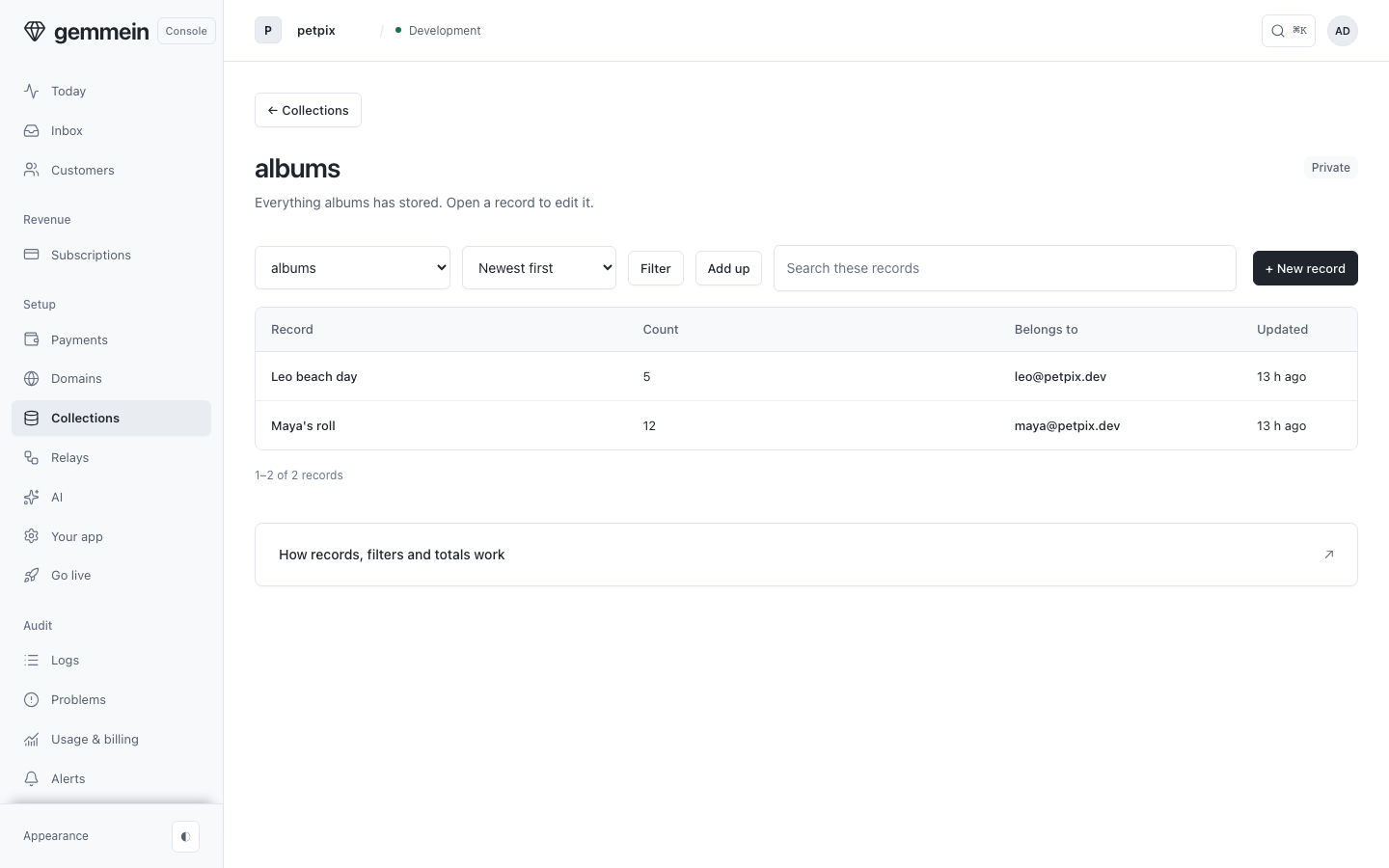
Records shows everything your app has stored in a collection, the way your app wrote it. Search it, filter it down to the rows that matter, add up a number field, and open any record to change it by hand.
The walk
The room
Open Records to see everything your app has stored in a collection, newest first.
Search and filter
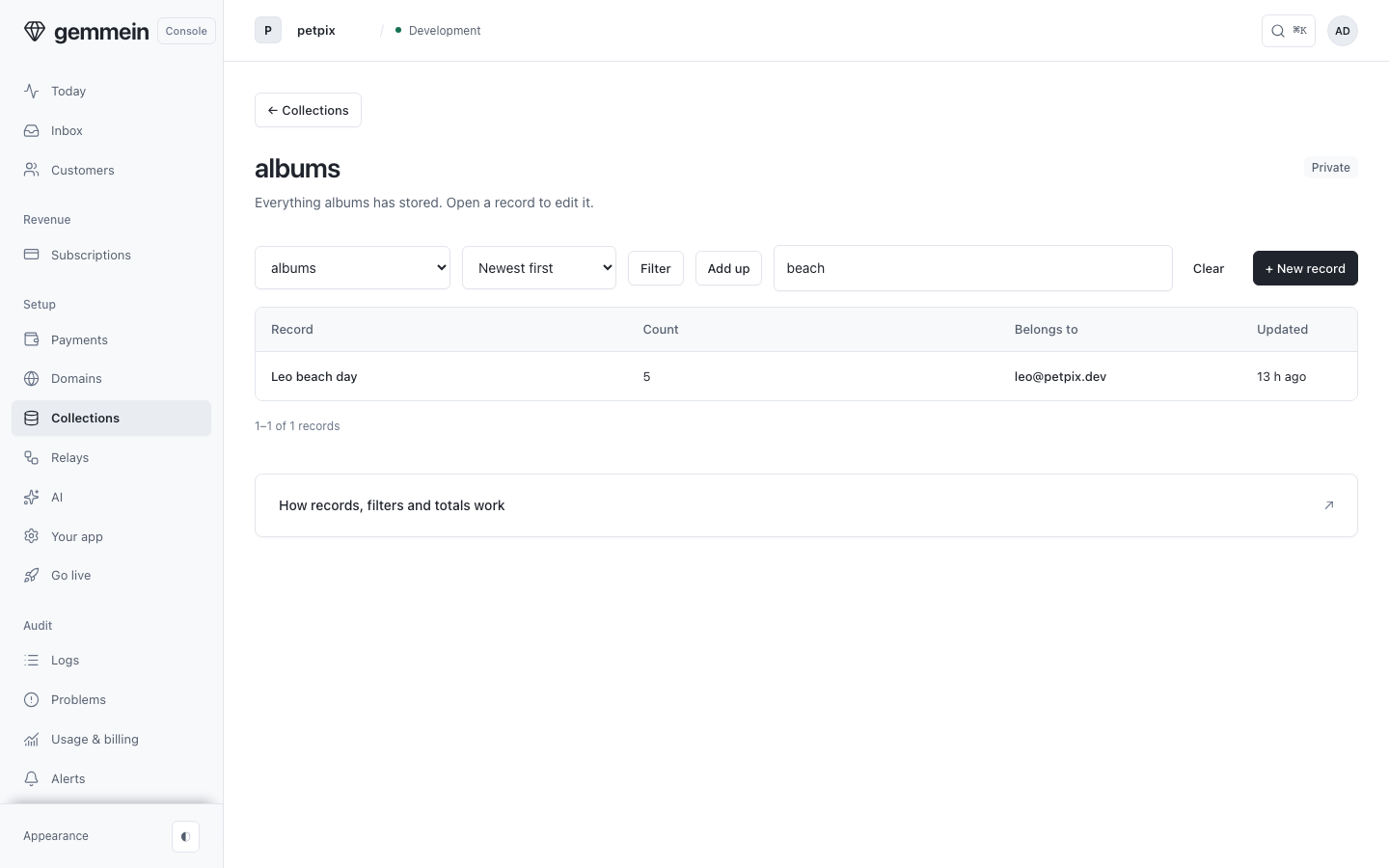
Type in Search and press return: the engine looks at every record in the collection, and the address carries the search so you can send the view to someone.
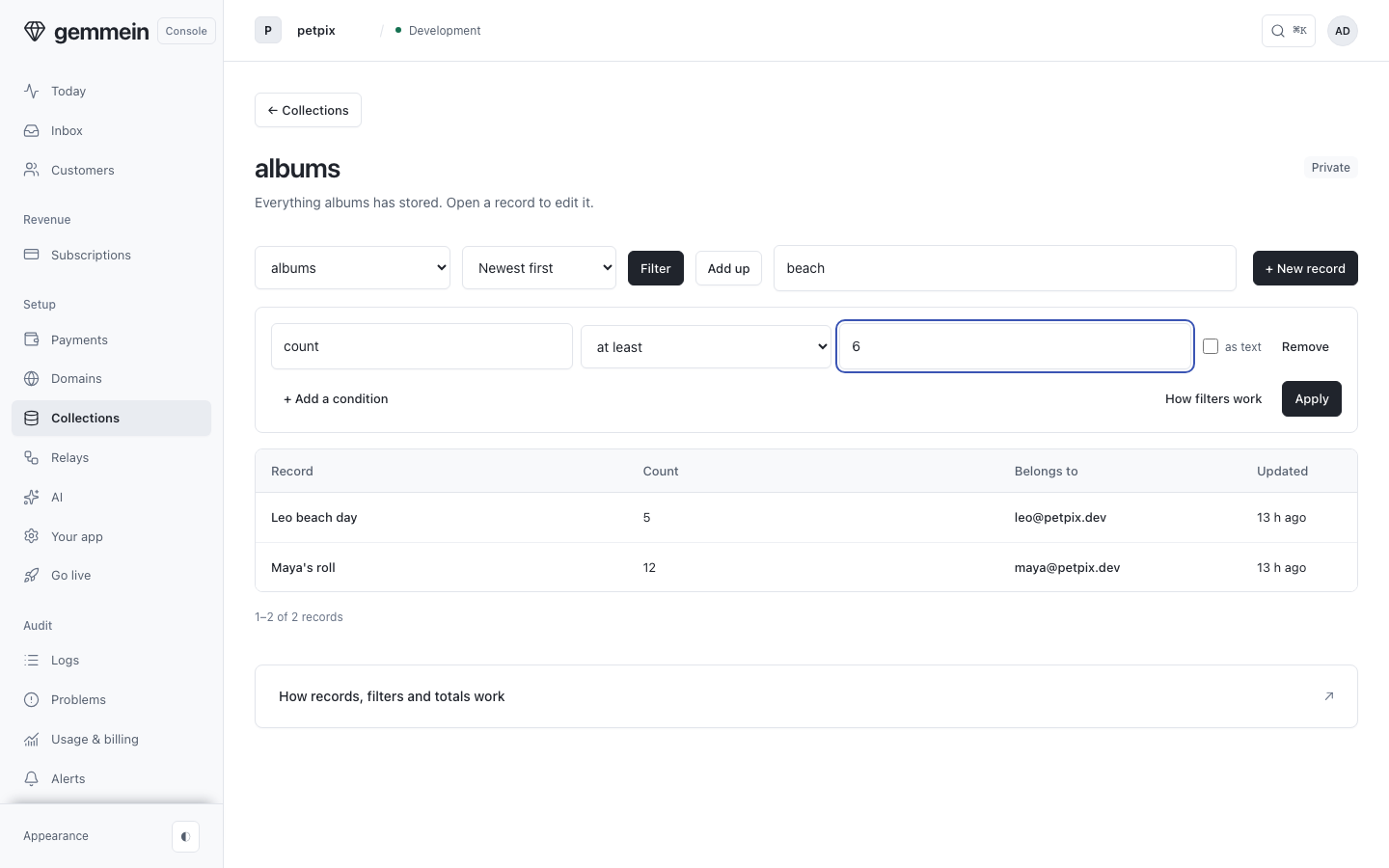
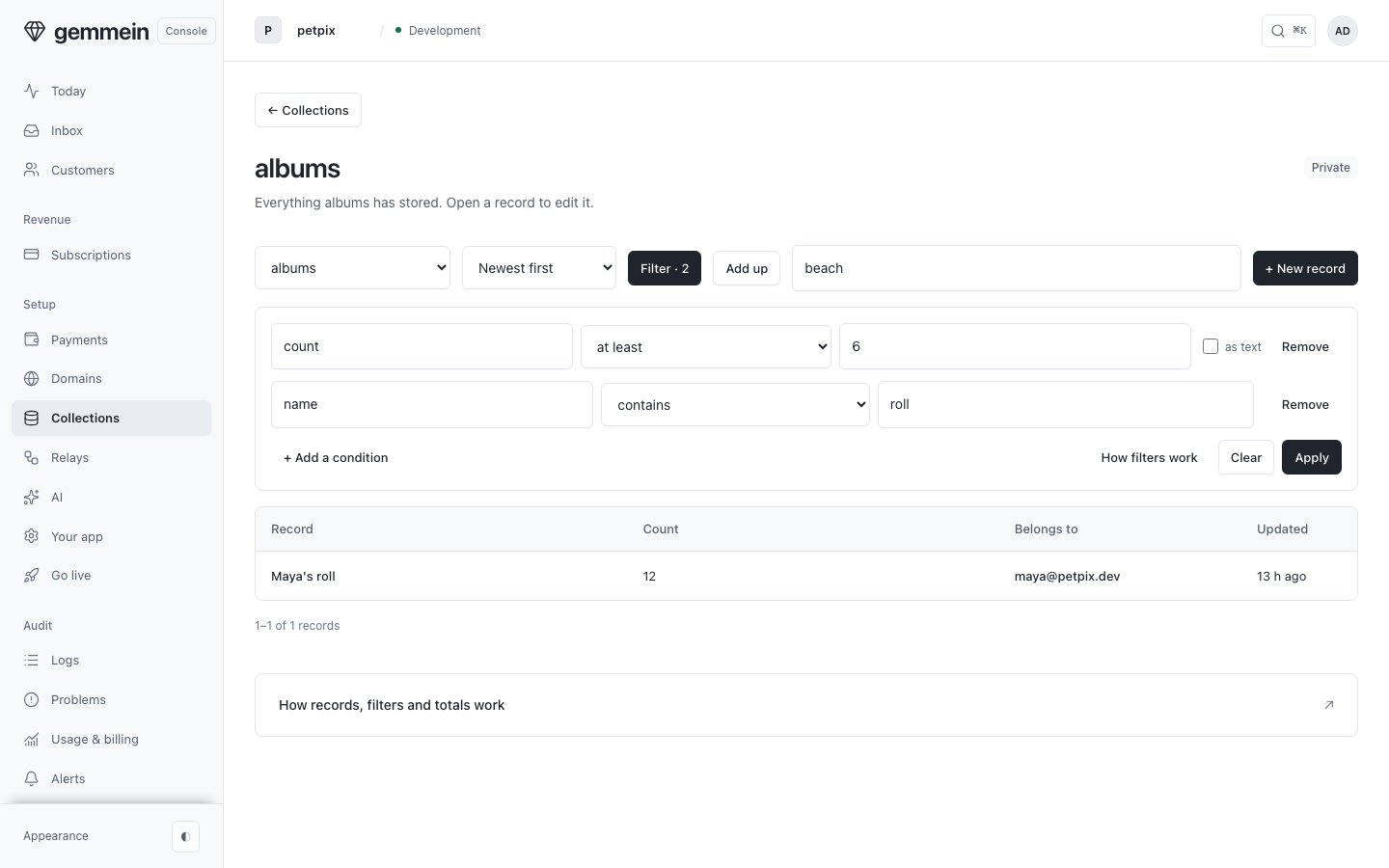
Choose Filter, then pick a field, how it compares and a value.
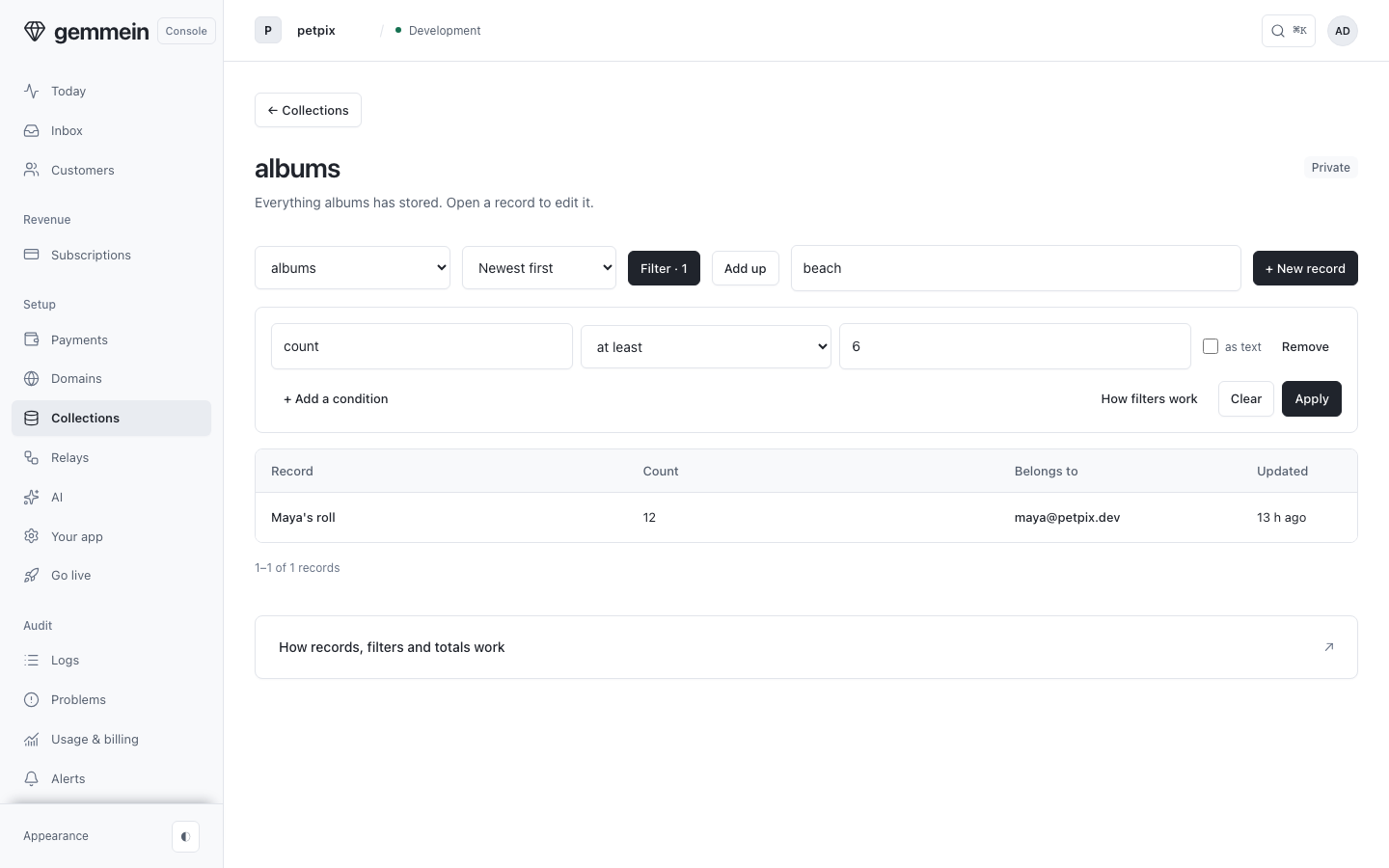
Choose Apply: the list narrows, and the line above it says how many records match.
Add another condition to narrow it further: a record has to meet every one.
Totals
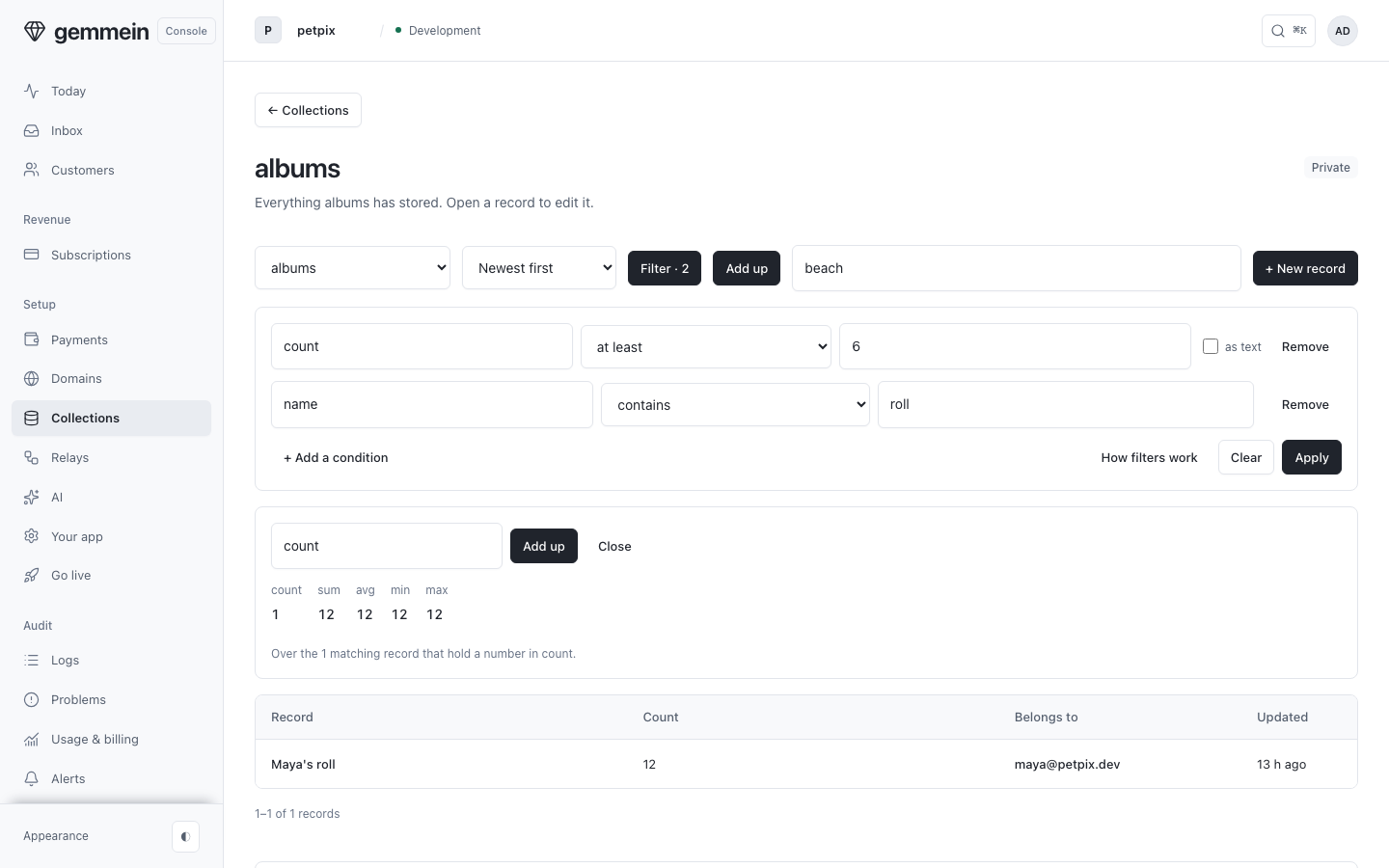
Choose Totals and add up a number field: the count, sum, average, lowest and highest of the records that match.
One record
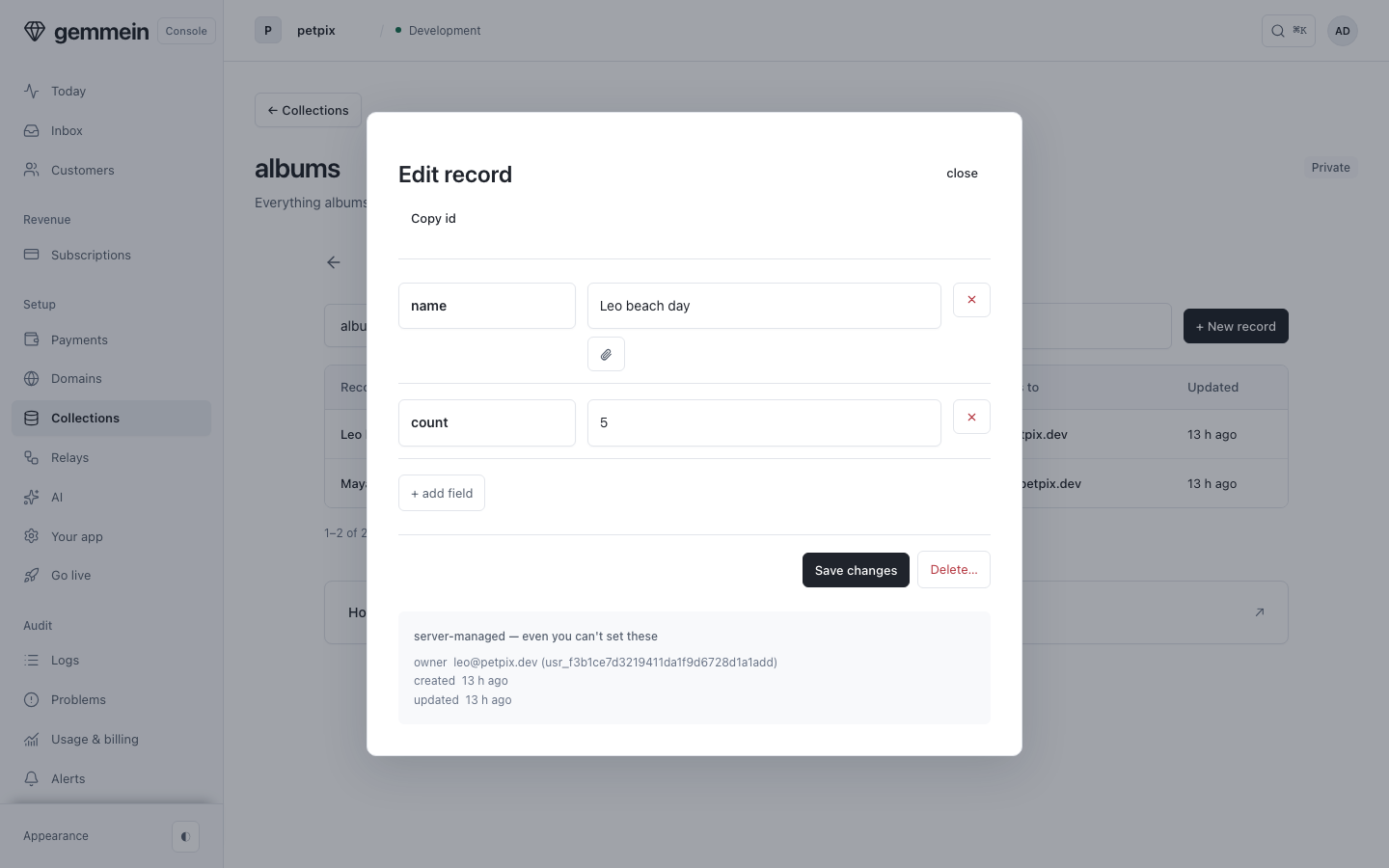
Open a record to change its fields by hand, or delete it.
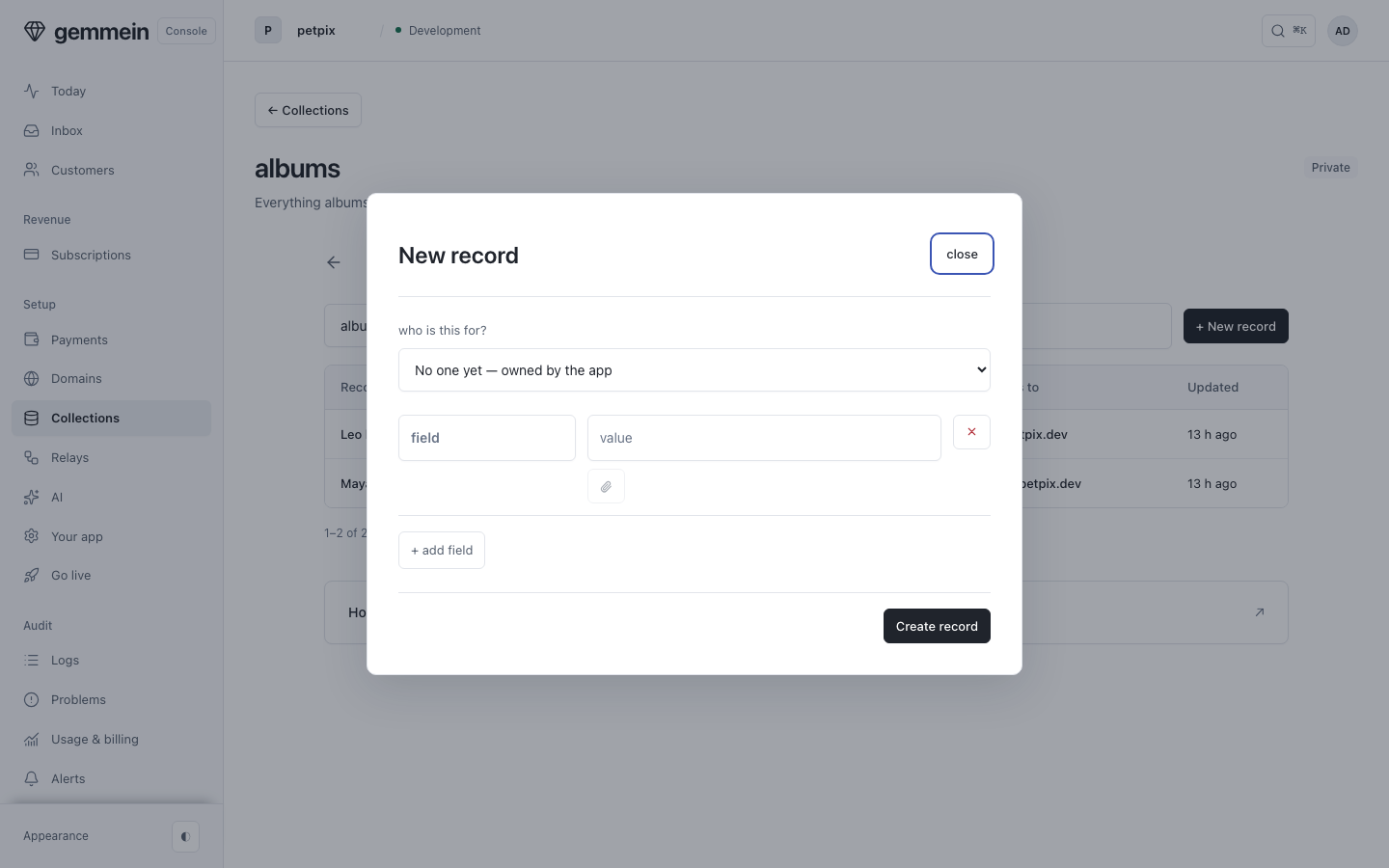
Choose New record to add one yourself, a field and a value at a time.
What it refuses and why
These are the console's own words when a change can't be saved or a request can't go through.
where.count.gt must be a number, or a string (compared as text — an ISO date orders correctly)
“Greater than” orders numbers as numbers and text as text; true and false have no order to compare.
field must name one of the collection's data fields (a letter, then up to 62 letters, digits or underscores) — the numeric field to sum, average and bound
Totals add up one field of your data, named the way your app writes it.
"createdAt" is server-managed — the server sets it, always.
When a record was made and changed is kept by Gemmein, so every record's history stays true.
How collections, rules and filters work for your app: Data & the rules.