Collections
Collections are the folders your app's records live in, and each one follows a rule about who may read and write it. Create one for each kind of thing your app stores, and lock one to a plan or product when only paying customers should reach it.
The walk
The room
Open Collections to see the folders your app's records live in, and the rule each one follows.
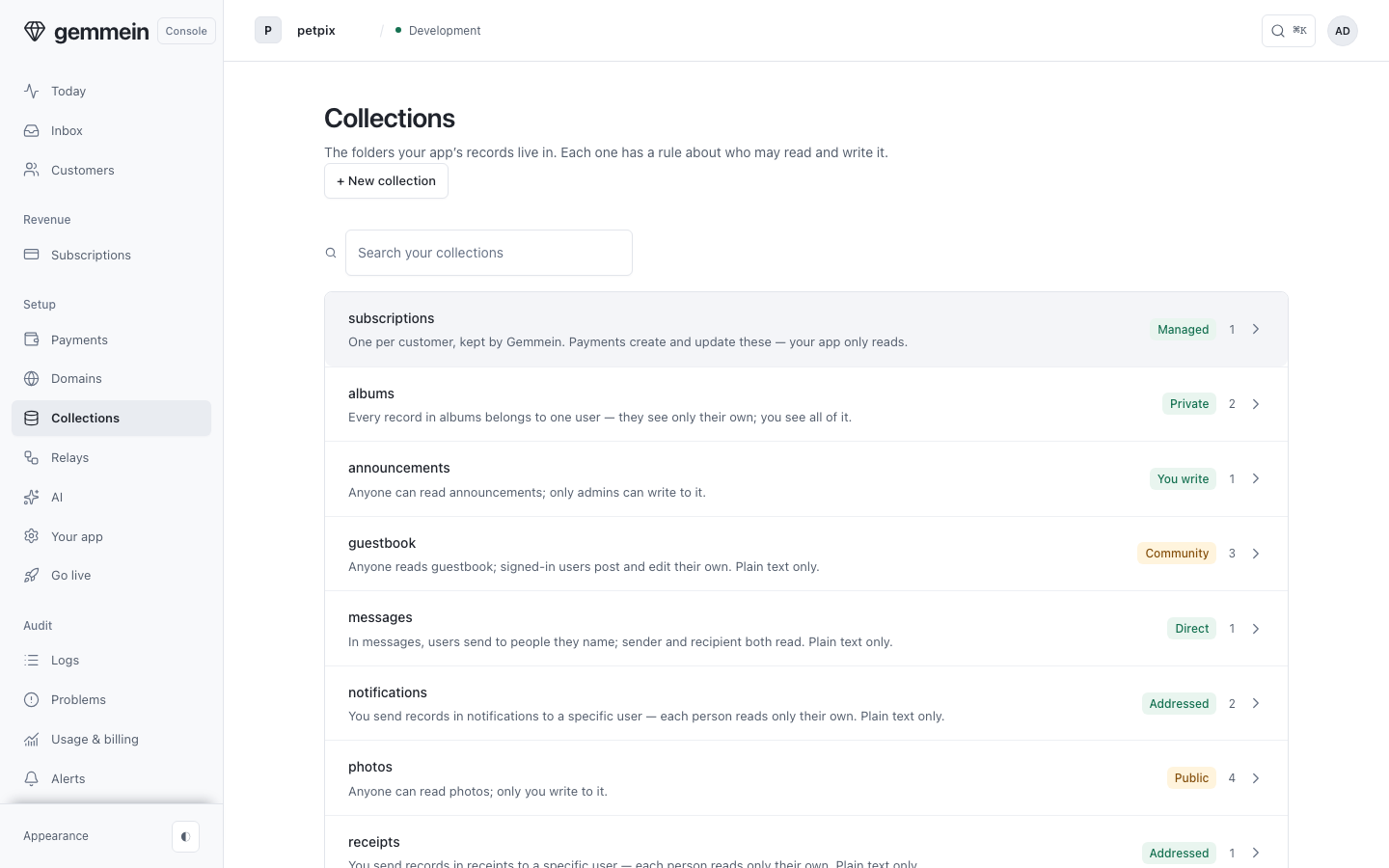
A new collection
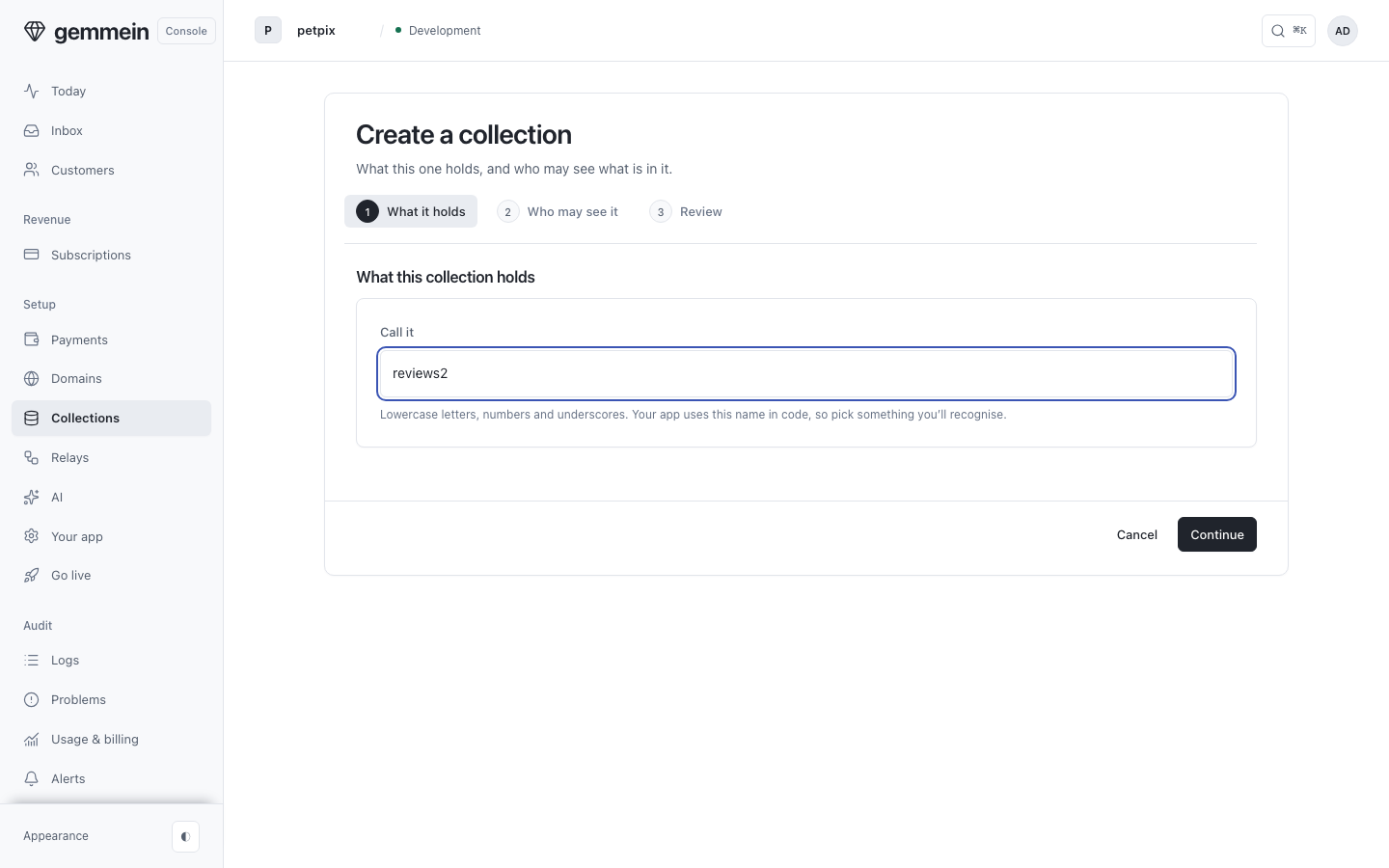
Choose New collection and name it: your app asks for it by this name, so it is lowercase letters, numbers and underscores.
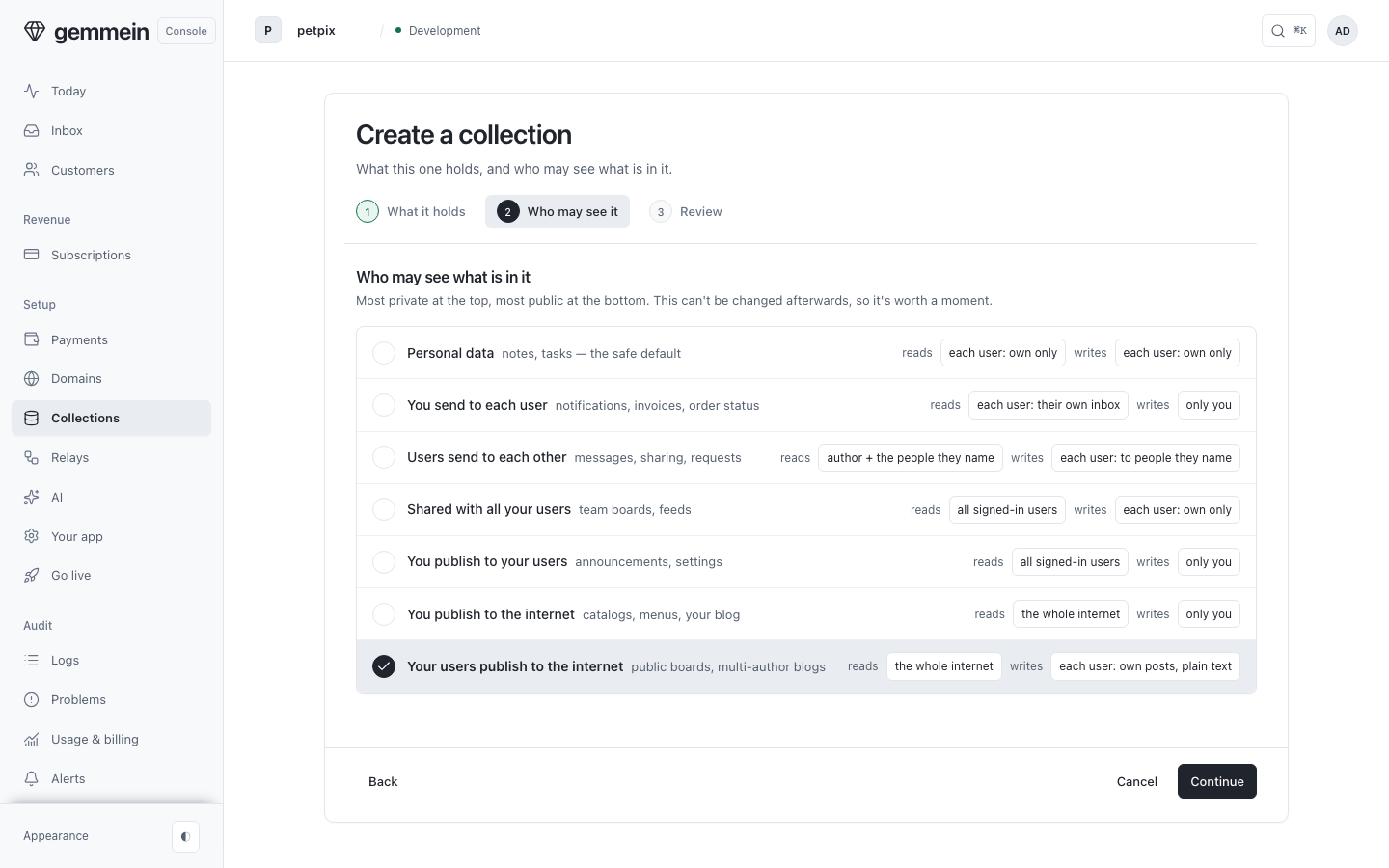
Pick who may read and write what is in it — most private at the top, most public at the bottom.
Review says who reaches it and what your app writes to use it — and names the one thing that cannot be changed afterwards.
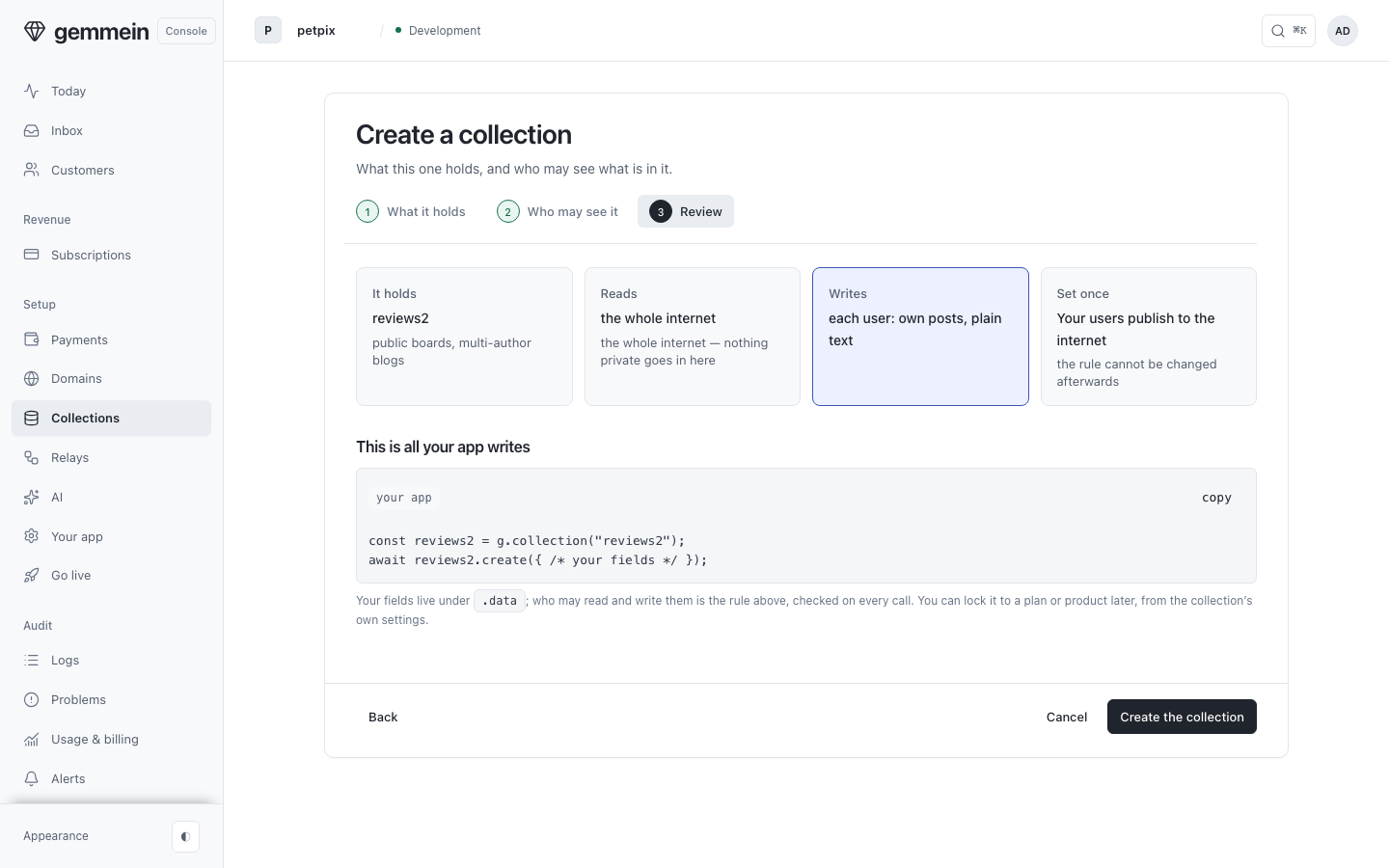
Choose Create the collection. The rule is set once, so pick the one that fits what the collection holds.
One collection
Open a collection to see how its records are shared, who may reach it, and what's inside.
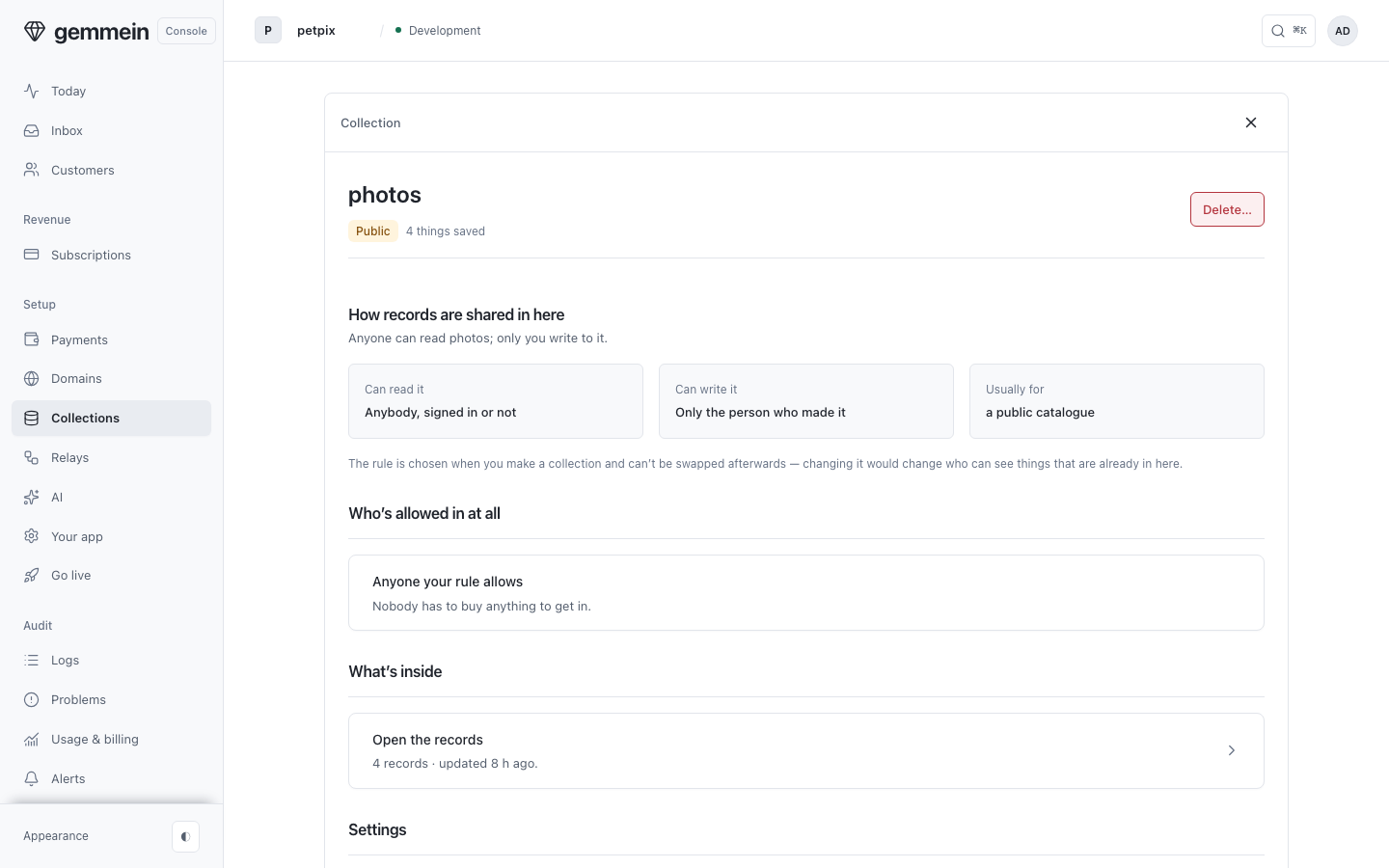
Under Settings, tick the plans or products that unlock it, so only customers on one of them can get in.
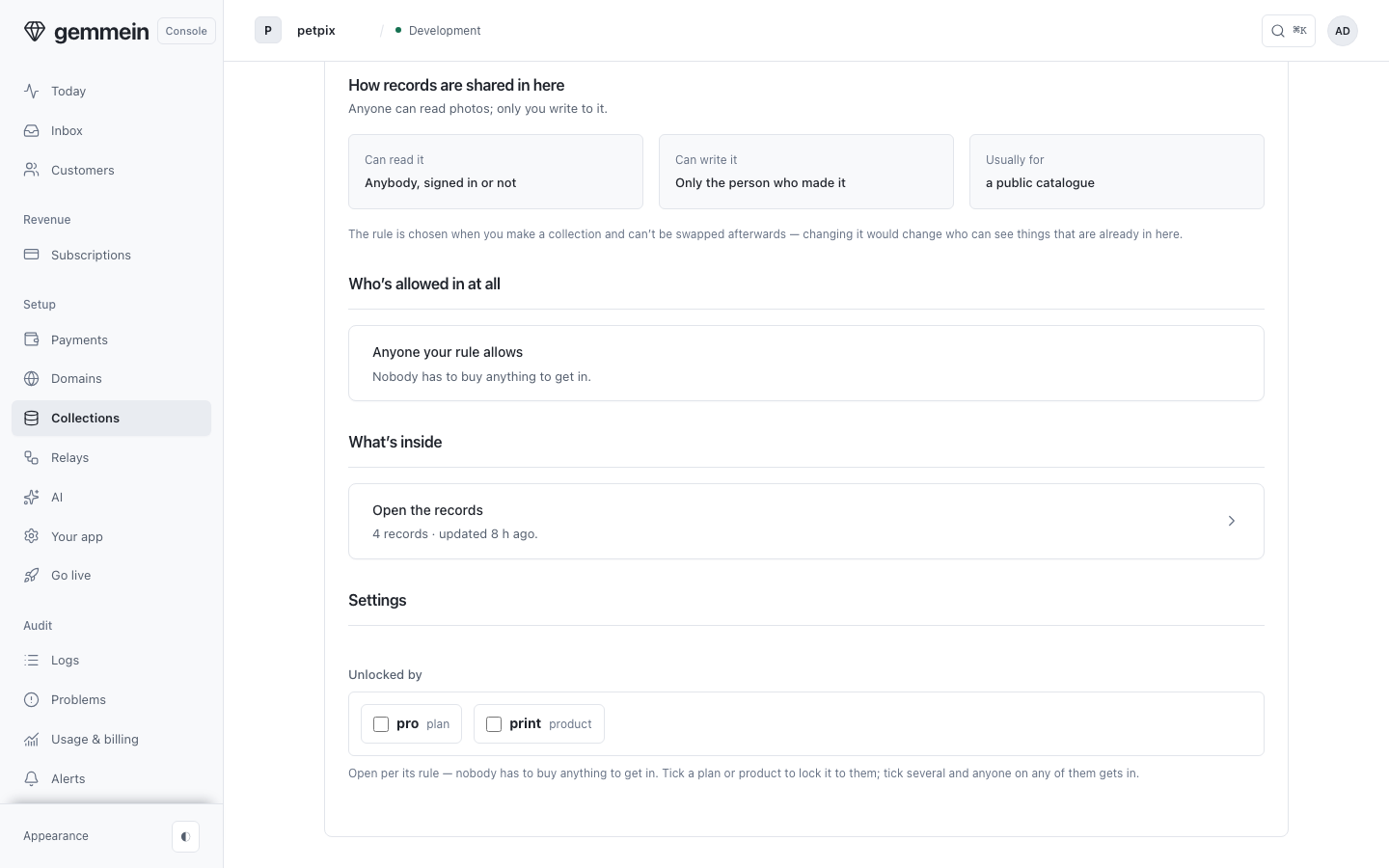
Choose Open the records to browse and edit what's inside, which the Records guide walks through.
What it refuses and why
These are the console's own words when a change can't be saved or a request can't go through.
Collection name must be at least 2 characters.
A collection's name is how your app asks for it, so it's long enough to read.
Lowercase letters, numbers, and underscores only. Must start with a letter.
The name travels in your app's requests, so it keeps to lowercase letters, numbers and underscores.
constructor
collides with a JavaScript built-in and can't be a collection name — pick another.A name JavaScript already uses would be unsafe in the code your app runs, so it can't be a collection's.
What each rule allows, and how records are shared: Data & the rules.